


Intent Is the New Interface

In the early 2000s, when we built the mobile data business at Verizon Wireless, the industry still saw the phone as a utility device. What changed everything was the realization that content and utility needed to live together in one place. That fusion turned the phone into a daily destination. It also created the basis for the modern app economy.
At Millennial Media, we helped complete that picture by giving developers a way to monetize. Tens of thousands of builders suddenly had economic oxygen. Brands found new forms of engagement. App discovery and monetization fed each other. What started as a collection of widgets became a global ecosystem with real gravitational pull. I lived that transformation from the inside. It felt like standing at the edge of a new continent.
Today, as OpenAI launches its app store, I am feeling that same inflection point again. But this time the breakthrough is not about content and utility. It is about intent and action. And the shift will be bigger and faster than anything mobile produced.
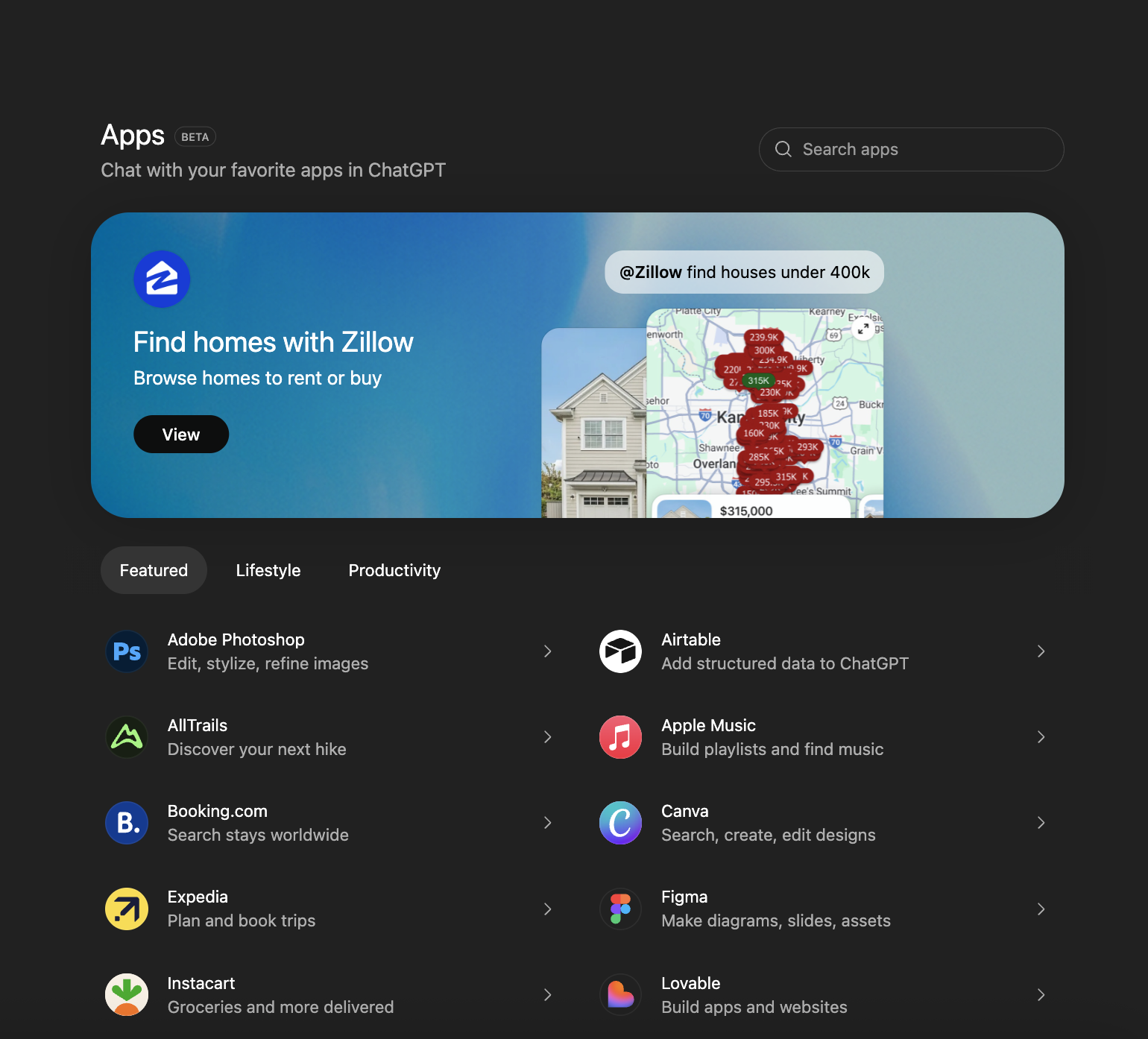
The mobile era asked the user to navigate. The AI era will ask the system to execute. A consumer will express a goal and expect the product to carry it to completion. The interface becomes optional. The workflow becomes invisible. And what consumers evaluate is not how something looks or how many features it offers. They evaluate whether the system gets the job done.
This is not a refinement of the app model. It is a redefinition of what apps are. They stop being places to visit and become capabilities that appear only when needed.
Consider how this shift rewires familiar services. Netflix becomes a story concierge rather than a wall of choices. A parent asks for something appropriate to watch with a daughter before bedtime, and the system understands tone, timing, age, and viewing history. It picks the right title, explains the choice, optimizes playback, and eventually coordinates viewing plans across services.
Resy evolves from a reservation tool into a dining strategist. A user describes the kind of night they want, the people involved, and the timing. The system checks multiple services, interprets preferences, handles transportation, coordinates calendars, and manages communication. The user does not search. The evening simply comes together.
Chewy turns into autonomous pet care. The user mentions symptoms. The system analyzes purchase history, guideline models, inventory and shipping options, and the likelihood of a dietary or environmental cause. It orders what is needed, schedules a vet if appropriate, sets reminders, and watches for changes. Commerce becomes continuous care.
AccuWeather shifts from forecast provider to planning engine. The user describes what they intend to do on Saturday. The system monitors weather patterns throughout the week, notifies them only when decisions must change, and manages downstream logistics. The value moves from reporting to readiness.
The pattern is clear. Mobile succeeded by combining content and utility. AI will succeed by combining intent and multi-step action. That is where the next generation of iconic companies will be built. Not in prettier screens, but in systems that accept responsibility for completion.
Founders should treat this moment with urgency. The products that thrive in the coming decade will not ask users to navigate. They will take on the work. They will break problems into small actions, move across services freely, maintain context, recover from uncertainty, and deliver results that feel almost automatic. Founders who cling to the old model will be iterating themselves into irrelevance. Founders who embrace this new contract will build companies that feel inevitable.
We are not moving into a world with better apps. We are moving into a world where apps disappear into the background and intelligence becomes the surface. Intent becomes the interface. Action becomes the output. And the companies that understand that shift will own the future.
For founders, the window is open now. Build the product that completes the job the moment the user states the goal, because the next dominant platforms will be the ones that deliver outcomes, not options. The market will not wait.
For investors, AI’s greatest potential is not available on the public markets, or in late stage secondary shares deals. 2025-2035 is the decade of explosive value creation – by applying AI.